The Aethyrian Dragon
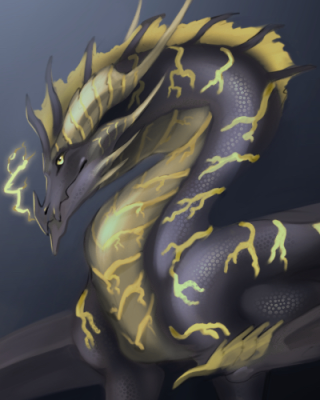
General Information;
Aethyrian dragons are a relatively young species, created by Auryelia and Athlryion, former gods of the Celestial and Cosmic dragons who fled Millirand to create the world of Aethyr. These Aethyrian dragons are (mainly) western in body type, and are possessed of a single magical affinity that distinctly shapes their appearances. Sorted into several different variants based on their magic type (called 'elements' regardless of nature), each has common attributes shared with others of their kind.
Statistics;
Name:: Aethyrian Dragon
Average Lifespan:: ~1000 years
Average Height:: differs by variant
Average Weight:: varies per individual
Location Found:: primarily Aethyr, but rarely abroad
*all statistics based on averages; extremes in any direction, or found in odd locations, are always allowed.
Subspecies Aethyrbound Disease
Notes;
Aether and Nether The Aethyrian elements spawn from the divine magics of Aether and Nether: pure energies in Aethyr that are present within every living thing, an after-effect on the energies of creation formed by the gods Auryelia and Athlryion. It is similar to conventional light and dark, but bolstered by the divine, and thus cannot be altered or destroyed. Due to the fusion of these divine, celestial energies in the making of Aethyr, each living creature - from Aethyrian dragons to the smallest fauna - is touched by these powers, and bound to them in a way that directly affects how they live. All creatures that have been crafted by the gods or brought to Aethyr by their wisdom are affected by the Aethyrian 'elements' (clarified below), with a limited number being born or hatched 'elementless'. Very, very few are capable of using pure Aether or Nether, and never both at the same time. These are detailed below.
* not to be confused with conventional Aether, the alchemical substance consisting of solid reiatsu.
Aethyrian Aether is equivalent to light reiatsu; energy in its purest light-aligned form, manifesting in a pure white color flecked in glitters of gold. Aethyrian Nether is equivalent to dark reiatsu; energy in its darkest form, existing as the natural counterbalance of Aether. It manifests as a pitch black color flecked in glitters of gold. It is known that, unlike conventional light or darkness, these divine magics are much more powerful and are much rarer in their pure form, found only in Aethyr. Aethyrian dragons hatched outside of their home Realm will be weakened magically, and be unable to access their element's full potential unless they return to Aethyr and reconnect with their natural attunement to Aether or Nether. Those hatched in other Realms may have limited physical elemental features and muted colors, though their element's color itself will remain largely vibrant.
Rarely, an individual may be capable of using Aether or Nether in its purest form. Generally discovered alongside their natural element around fledging age, these divine types of reiatsu are unique in that they, over time, seem to 'push out' an Aethyrian dragon's other magic, altering their appearance and weakening their element until it is no more. Aether dragons slowly lose all of their color, and their markings will grow wispy and insubstantial from fledging to adulthood; their base color may lighten to white by the time they reach elder. Nether dragons will likewise lose their color and their markings will grow dark and ethereal from fledging to adulthood; their base color may darken to black by the time they reach elder. In both cases, their traditional elemental magic will be gone entirely by the age of five-hundred, replaced entirely by Aether or Nether. Most often, this elemental transition is almost complete by two-hundred, though never later than five. No dragon may use both Aether and Nether, but has one or the other only.
The magic of pure Aether and pure Nether are both limited store abilities; please do not make one unless bought. Celestial Scions, listed below, are granted one of these automatically with their own unique store-bought item. Thank you!
Pure Aether and pure Nether are not equivalent to Pure White and Pure Black reiatsu; it does not share a connection with the Ethers or the Void, and upon very close inspection, can be told apart by the keenest of eyes due to the tiny golden flecks.
Aging and Lifespans Aethyrian dragons are not immortal like their similar dragon cousins - most do not live long past their first millennium. This is long thought to be their connection to the powerful Aether and Nether energies, and the effect it has on their bodies. Those that remain in Aethyr their entire lives will likely only reach the perceived average of a thousand years, though those that travel to other Realms - away from their connection to Aether or Nether - may live much, much longer (despite the Aethyrbound effects linked above). This faster aging is seen in all Aethyrian races.
Celestial Scions Celestial Scions are an important aspect of Aethyr, and stem from the historical Divine Scions of antiquity - two beings that were chosen as vessels for the Celestial Gods, one of Aether and one of Nether. These original Scions were fully engulfed and changed by the gods' presences, a dragon of white and gold and a dragon of black and gold, both of which had access to all of their gods' elements as well as either Aether or Nether. These Divine Scions were said to have their colors and markings muted (Aether to white with faint markings, and Nether to black with much of the same) and appeared 'broken and put back together' with the golden kintsugi markings overlaying all. The battle against the Serpent's presence and its corrupted beasts was so destructive, and the power needed to blast apart the snake's bones so much, that it fused the Scions with the gods to a level that they almost could not separate from. When the Celestial Gods parted from their vessels, the two chosen dragons perished, and the gods withdrew to a dormancy that lasted several thousand years.
Since the gods' return, they have allowed small pieces of their power to touch the eggs of certain dragons to create individual Scions unbound by the full powers of their chosen deity and are able to live full lives. Celestial Scions hatched since have little of the originals' power, but share a touch of that magic, and are able to harness multiple elements at once, as well as the magic of pure Aether or Nether. Nether Scions can learn most Nether elements easily, and some Aether elements rarely, while Aether Scions are the opposite - they can learn most Aether elements easily, and those of the Nether come to them with difficulty. However, modern Scions cannot utilize more than six elements total regardless of alignment.
Aether Scions are light-colored dragons with golden metallic kintsugi-like markings that work with their natural markings of their family-born element. Nether Scions are dark-colored dragons with golden metallic kintsugi-like markings that work with their natural markings of their family-born element. Most often, these dragons will be hatched looking nothing like their parents in coloration, though physical features and traits will remain. They generally master four to six elements in their lifetime, and these elements will always be white or black with touches of gold, depending on whether they are Aether or Nether. Pure Aether will always be breathed and manipulated as pure white, and pure Nether will always be breathed and manipulated as pure black. If found, they are taken in by the Celestial Order to be raised amid its religious scholars.
Celestial Scions' kintsugi markings are found to have an unusual form of biological gold in their scales and hide; it has an identical makeup to traditional gold, and shed scales, once their power is lost, can be melted down (though this is highly illegal in most Aethyrian kingdoms). The color and amount differs from individual to individual, but can be yellow gold, white gold, rose gold, etc depending on the hue and nature of their kintsugi.
Celestial Scions are a limited store class; please do not make one unless bought. Limited ONE per member. Thank you!
Elements and Magic Terminology Elemental and non-elemental breathed/manipulated magic in Aethyr is commonly called 'elements' regardless of whether or not the magic is conventionally elemental, especially in non-elemental affinities such as spirit, poison, and blood. Reiatsu as a term is virtually unknown within the bounds of the Realm, and knowledge of it is understood as 'pure magic' or 'energy' and its purest manifestations are the Aethyr-unique Aether and Nether as listed above. These 'elements' are Aeria (wind), Aquaria (water), Glacia (ice), Ignia (fire), Luxia (light), Natura (earth), Voltia (lightning), Anima (soul), Aurata (metal), Chrona (time) Phobia (fear), Sanguia (blood), Toxina (poison/venom) and Umbra (shadow).
All elemental magic connected to Aether or Nether is strongest in the Realm of Aethyr. Should an Aethyrian dragon travel to another world, this connection weakens, and their power will be reduced. While it will never disappear entirely, and how noticeable the effect is depends on the individual, it will always be a marked difference.

Elemental Balances Unlike conventional elements, Aethyrian versions balance each other in unexpected ways. Upon their creation, each element was crafted and shaped from an energy core with specific values, one by Auryelia - Aether - and one by Athlryion - Nether. Each god created each core in conjunction with the other, and thus elements were born in balancing pairs.
The first four elements created - Luxia (light), Umbra (shadow), Aeria (wind) and Aurata (metal) - were formed of cores that served as opposites. Light to balance darkness, and wind to balance metal. However, both Celestial Gods turned their focus to a different type of balance after these, and the next resulting five pairs were crafted of similar cores. The cores of Ignia and Anima are known as 'flare' cores; that of Aquaria and Sanguia were liquid cores; Glacia and Chrona were formed of 'cold' cores; Natura and Toxina share a 'life' core; and both Voltia and Phobia share a 'shock' core.
These cores are little understood, and are thought to be simple catalysts formed of Aether or Nether for the Aethyrian dragons' creation. Some remnant of that energy can be considered to exist within an Aethyrian's soul - not simply dragons, but other created races as well.
Elemental Colors Aethyrian dragons are known for their unique elemental colors. Each elemental affinity is possessed of either a single or multiple unique hues that are found somewhere on the dragon in its appearance, most commonly markings on their scales or fur, but less commonly in their secondaries, spikes/spurs/claws, or eyes.
The origin of the elemental colors come from the creation of the species itself, where the Celestial Gods gifted each elemental variant five distinct colors; red, orange, yellow, green and blue. This is thought to be a unique form of reiatsu ‘staining’ that is wholly separated from modern dragons’ aura, crafted of Aether (for Aeria, Aquaria, Ignia, Luxia, Natura and Voltia) and Nether (for Anima, Aurata, Chrona, Phobia, Toxina and Umbra). This is also thought to be the reason Aethyrian dragons may rarely tap into pure Aether and Nether, as it exists within each creature from their creation - as well as why non-dragons cannot.
Through interbreeding, these colors have spread through the entire spectrum and beyond, resulting in multicolored elements, colors not previously found - such as cyan, purple, and gray - as well as the symbols of purity: white for Aether, and black for Nether. Colors will most often be a mix of parents with some influence from grandparents, though some may exhibit colors from long-dead ancestors.
Elemental-Cross Hybrids Aethyrian dragons of any element may produce offspring with any other element. However, only one elemental magic can 'set' in an Aethyrian dragon at any given time. When two different elements of the either alignment cross, the result will be either element, never a new element. For example: an Aeria dragon producing a clutch with an Ignia dragon, resulting in half-blood offspring that will display physical traits from both parents, but will be either Aeria or Ignia. Half-blooded dragons of mixed elemental lineage are considered by much of high society beneath pure elemental lineages, and (though untrue) are thought to be weaker in magical strength. However, in recent centuries, mixed-blood types of the same alignment have been more widely accepted. Those of mixed alignment - Nether and Aether crosses - are frowned deeply upon by all parties.
Rarely, a cross-elemental hybrid will have a somewhat altered version of their element; while these align with the fourteen elemental magics, they may be affected by their other parent and be represented in markings, colors and physical features. These may manifest in a variety of ways, and no two 'sub elements' are entirely alike. Remember: these are rare occurances, and most often a cross-element hybrid will inherit the natural element of one of its parents, not a sub-manipulation like these. However, the following have been recorded:
Most common are lava, a cross of Ignia and Natura (aligned to Natura); plasma, a cross of Ignia and Voltia (aligned to Voltia); fog, a cross of Aeria and Aquaria (aligned to Aquaria); and steam, a cross of Voltia and Aquaria (aligned to Aquaria), all of Aether-aligned mixes.
There is sonic, a cross of Anima and Phobia (aligned to Phobia); corrosion, a cross between Aurata and Chrona (aligned with Chrona); glass, a cross of Anima and Aurata (aligned to Aurata); and acid, a cross of Sanguia and Toxina (aligned to Toxina), all of Nether-aligned mixes.
Especially rare are mixed-alignment crosses such as smoke, a cross of Umbra and Ignia (aligned to Ignia); thunder, a cross of Phobia and Voltia (aligned to Voltia); snow, a cross of Umbra and Glacia (aligned to Glacia), illusion, a cross between Phobia and Luxia (aligned to Luxia, immensely rare), and ink, a cross between Aquaria and Umbra (aligned to Aquaria).
Magic Classes in Aethyr Specialized magic classes in Aethyr differ, especially among the Aethyrian dragons; as glyphwriting is considered 'magic', all other magical classes are seen and handled very differently. Most non-inherent abilities are taught and used through glyphwriting, and cannot be accessed by Aethyrians any other way. Runeweavers are considered a form of glyphwriting, and is seen as a natural progression of it, utilizing a magic-infused form of Aethyrian runes.
The classes of alchemist, conjurer, enchanter, farseer, necromancer, and summoner all use glyphwriting specifically to access and use their specific magic, often drawing the glyphs before or while initiating the secondary magic class (IE, a necromancer drawing glyphs above or on a body to ressurect it, or conjuring/summoning through the glyphs themselves). As a result, these classes are somewhat more magically potent than those used in traditional ways, but take significantly longer to use in most cases.
Realmfire users, pure Aether/Nether users, and pure Black/White reiatsu users tend to have their glyph magic reflect the colors of that particular Realm’s reiatsu color, Aether/Nether color, or Black/White reiatsu respectively. However, due to the rarity of these abilities, this is little understood by Aethyrians, and may result in unusual cultural views.
Aethyrian auramancers, Chaos users, clerics, dreamsages, empaths, psions, seers, spirit-walkers and wildwhisperers are inherent abilities and change little (if at all) from traditional classes in other Realms. Auramancers and Chaos users are considered with wariness, though generally accepted.
Shapeshifting and the soulbound are both heavily debatable abilities, and are both considered 'banned' by the Celestial Faith due to their view of these classes corrupting the 'divine shape' the gods have given an individual. Thus, shapeshifters and those that form soulbonds with others (such as dragonriders) are taboo, and are nigh unheard of within Aethyr because of it. While both are possible, it is so ostracized that shapeshifters are nearly bred out of modern genetics, and soulbonded individuals are often exiled completely. Moonfire is completely unheard of in Aethyrian dragons, unless they've visited Ristell.
White Scales Aethyrians with pure white base scales have been thought to once have come from a theorized 'god-touched' bloodline called the 'Lightbringers', who are now known as the noble House of the Oathkeepers. This House claims that their white scales come from the gift of both gods in unison for their dedication in purging the taint of the Great Serpent, though this historical account has been brought into question on multiple occasions.
Though pure white dragons have been known to have hatched within the last thousand years that are not part of the Oathkeepers and are reasonably common for Luxians, this remains the most populous House and their lineage is considered 'divine'. Dragons that display pure white scales will be celebrated as god-touched, and those not a part of the Oathkeepers may be mistaken for them. This does not apply to white elements, or those dragons who's scales are overtaken by pure Aether.
Diet This is what this species, and any variants, may eat at any given time.
Common:
Ignia, Voltia, Sanguia, Toxina, Umbra, Chrona-
primarily red meat, large game, raw or cooked; varies greatly per individual.
Aeria, Aquaria, Glacia, Anima, Aurata, Phobia-
primarily white meat, large fish, raw or cooked; varies greatly per individual.
Natura, Luxia-
primarily nuts, berries, plantlife, with limited cooked meals of white and red meat; varies greatly per individual.
Uncommon:
Ignia, Voltia, Sanguia, Toxina, Umbra, Chrona-
white meat; small game.
Aerie, Aquaria, Glacia, Anima, Aurata, Phobia-
prepared plantlife, tubers, nuts and berries; sometimes fresh carrion or bone marrow (especially for Phobia).
Natura, Luxia-
white meat; small game; cooked red meat.
Rare:
Ignia, Voltia, Sanguia, Toxina, Umbra, Chrona-
tubers, nuts and berries, carrion and bone marrow.
Aerie, Aquaria, Glacia, Anima, Aurata, Phobia-
older carrion, unprepared plants.
Natura, Luxia-
raw red meat of any kind.
Overview:
Aethyrian dragons are immensely varied in their diets. While the greater majority of dragonkind are apex predators, they also partake in a vast array of different foods and most Aethyrians - especially in settled regions - cook and prepare their meals, often seasoned and prepared to their variant's liking. Most hunt with regularity, with smaller dragons hunting more frequently than larger beasts. Others may forage or fish, and some grow their own food or raise their own livestock. However, it is rare that any dragon would partake in something already dead, and most do not hunt sapient prey. Food trade is common with Aethyr's bipedal races, and humanoid cooks are found in many a city.
Gallery;


Credits;
Species info credited to Fyfergrund, and Verridith.
Basic concept introduced by a collaboration with CarinaAyland.
In-Depth Information;
Appearance Aethyrian dragons are very similar to traditional dragons in basic shape, and are often referred to as 'dragons' both within Aethyr and without. The vast majority sport four limbs and a pair of wings (closest to western dragons), covered in scales with an assortment of features - such as horns, frills, manes, etc - shaped by their elemental alignment. They are smaller than true dragons on average, and do not grow much beyond their averages due to their short lifespans. Certain Aethyrian elements are also known to produce alternate limb configurations such as groundrakes or wyverns, though these are considered quite rare. These alternate configurations are genetic, which means they may crop up in other elements if a parent or grandparent was one such variation.
Most Aethyrian dragons' wings are batlike, with three to five wing fingers, and either a thumb claw or growth upon the wing hand. Feathered wings are common to Aeria dragons, but can be found in any with this variant's heritage. Hybrid wings - consisting of both feathers and webbing - are largely uncommon (save for Luxia), but may be found in various elemental mixes and are always attributed to either Aeria or Luxia blood.
The vast majority of Aethyrian dragons are born from one of the twelve primordial and two derivative 'elemental' affinities, sorted into thirteen elemental variants and one true-element subspecies. These are thought to be split by alignment to Aether or Nether, an Aethyr-unique division of pure light and dark reiatsu, one that affects all of this Realm's living things and much of its magic, culture and physicalities. These variants are Aeria (wind), Aquaria (water), Glacia (ice), Ignia (fire), Luxia (light), Natura (earth), Voltia (lightning), Anima (soul), Aurata (metal), Chrona (time), Phobia (fear), Sanguia (blood), Toxina (poison/venom), and Umbra (shadow). Aethyrian dragons can only have one element, even if hybridization between the variants occurs.
However there are cases in which a dragon is not connected to Aether/Nether, and thus are born elementless. These have no magically-aligned markings, but their features will reflect their parentage and the magical affinities found within. Most elementless Aethyrians do not live long, and their colors fade and features wither generally before they reach true adulthood, due to their lack of connection with Aether or Nether.
An Aethyrian dragons' colors are first and foremost dictated by their elemental hue; all Aethyrian dragons host special elemental colors unlike true dragons or conventional magic, detailed in Notes. Base colors vary, but Aether dragons tend to be bright, where Nether dragons are much darker; for example, no purebred Aether dragon may sport black as a base color, and no purebred Nether dragon may sport anything close to white. While Aethyrian dragons tend to have common color sets found often in their variant, other colors can be found, and there are no restrictions on color groups or mixes. However, their element color must be found somewhere on their body, even if said color is very minimal (such as their eyes).
Aether: Aeria: western, wyvern, 11ft (3.3m)
Wind-aligned Aethyrians. Aeria dragons are tall, elegant figures, often slender and graceful, and regal in appearance. Their scales are often very thin, and may naturally have scaleless hides or a coat of proto-feathers (though coats of complete fur or feathers are unheard of). Common colors include blues, teals, whites, greys and silvers. Aeria markings tend towards natural or very abstract gusts of wind or swirls. Elementally-aligned features may include but are not limited to: feathered crests, whiskers, and feathered wings though the latter is exclusive in Aethyrian dragons to the purest Aeria lineages.
Aether: Aquaria: western, groundrake, 10ft (3m)
Water-aligned Aethyrians. Pure Aquaria dragons tend to be robustly built, especially those that dwell the deepest within the Starswept Oceans. However, those that dwell on the surface or in coastal regions tend to be slimmer and more slender than their deep-dwelling counterparts. Common colors include blues, purples, greens, greys and blacks. Markings commonly have natural or abstract flowing stripes, running water, waves, water surface, bubbles, ripples, etc. Elementally-aligned features may include but are not limited to: fins, sharp and even (dolphin-like) fangs, semi-transparent membranes, tendril-like whiskers, webbed feet, bioluminescence, and gills, though the latter is exclusive in Aethyrian dragons to the purest Aquaria lineages.
Aether: Glacia: western, groundrake, 10ft (3m)
Ice-aligned Aethyrians. Glacia dragons are large, sharp-edged and imposing, with strong builds and razor scales. Common colors include greys, silvers, whites, blues, teals and greens. Markings reflect natural or abstract ice and/or snow with swirls and soft/squiggly stripes for snow, diamonds/pointy crystalline markings or soft glacier patterns for ice. Elementally-aligned features include but are not limited to: ice accents/effect on horns, frills and spikes; sharp, jagged or bladed body parts and growths; and stiff fins and frills that resemble frozen fur.
Aether: Ignia: western, wyvern, 11ft (3.3m)
Fire-aligned Aethyrians. Ignia dragons are of average height, but have variable builds with an assortment of scale and hide types and body configurations. Common colors include reds, oranges, yellows, golds, purples, blacks and greys. Their markings range from natural to abstract shapes associated with fire and heat, embers, flames, lava, and sparks. Elementally-aligned features include but are not limited to: manes and ruffs of fur; wavy fins, frills and horns that resemble fiery shapes; a glowing core to their manes and fur of bioluminescence, to be turned on and off at will; and plate over the chest/glow underneath plates that resemble a furnace, though the latter two are exclusive in Aethyrian dragons to the purest of Ignia lineages.
Aether: Luxia: western, 12ft (3.6m)
Light-aligned Aethyrians. Lithe and gracile, Luxia Aethyrians are considered the most elegant of all, long of body and of limb. They most commonly sport pale base colors, and are one of the few who may naturally (if very rarely) hatch with pure white scales, seen as a sign of favor by Auryelia. Darker scales are uncommon, and may be seen with derision, while brighter and pale marking colors are highly sought after. Marking shapes being to mind light and healing magic; suns, stars and moons are common, as are light rays, swirls, wisps, orbs and other similar imagery. Many Luxia dragons sport iridescence, painting their scales in a spectrum of color when struck by light. Horns, spurs, claws and spikes are all often very smooth and possessed of gentle curves, never plates or rough textures. Elementally-aligned features may include fur and feather accents (including hybrid wings), flowing and extravagant frills, long oft-tufted ears (that begin to droop with old age), or bioluminescent markings, though the latter is exclusive to the purest of Luxia lineages.
Aether: Natura: western, groundrake, 13ft (3.9m)
Earth-aligned Aethyrians. Natura dragons have incredibly variable builds, though there are commonalities in the various types. Those that are hatched to earth families that specialize in the moving of rock and stone often have heavy builds and thick plated scales; plant and flora families are gracile and slender, sometimes described as willowy in appearance. Common colors include browns, tans, greys, blacks, greens and blues. Markings range from leaves, vines, flowers, branches, and rocks, sand, cracks, geodes, moss, etc, to sharper markings, shattered crystals, sharp lines, among others. Elementally-aligned features may include but are not limited to: wooden/leafy/rocky mimickry in their horns, fins, frills and other growths; tusks; heavy plates and armor; crystal growths somewhat similar to a gemdrake's, though the latter is exclusive to in Aethyrian dragons to the purest of Natura lineages and does not reflect a diet of eaten gemstones.
Aether: Voltia: western, wyvern, 10ft (3m)
Lightning-aligned Aethyrians. Generally of athletic and muscular builds, though individuals may lean either slender or heavy depending on family genetics and heritage. Common colors include greys, silvers, blacks, whites, blues, and yellows. Most have markings that resemble abstract or natural electricity/lightning with a mix of zig-zags, sharp points, curves, etc. Elementally-aligned features may include but are not limited to: sharp and jagged horns/spikes/frills, sharp physical features, and glowing vents between plates, or in front or between ribs, though the latter is exclusive in Aethyrian dragons to the purest of Voltia lineages.
Nether: Anima: western, wyvern, 8ft (2.4m)
Aethyrians with abilities aligned with the spirit, reiatsu, and necromancy. Etherial in nature, Anima dragons are of average height and various builds, though they tend to be more gracile and lean. They commonly have bright and bold coloration unlike most of their kind, and common colors include the entire spectrum. Their most remarkable feature are the glowing markings that resemble runes across their bodies, often on the face, neck, sides, tail, and wings (though they can be found in other places, such as the shoulders and legs more uncommonly). Magically-aligned features include but are not limited to: veil- or ribbon-like growths, bioluminescent markings, and naturally unique wing web shapes and patterns including false, ribbonlike 'fingers' mid-web, though the latter is exclusive in Aethyrian dragons to the purest of Anima lineages.
Nether: Aurata: western, groundrake, wyvern, 11ft (3.3m)
Aethyrians with abilities aligned with the art of metal manipulation. Aurata dragons range widely in build, but tend to have broader wings and sharper claws than most other Aethyrian dragons. Common colors include metallic hues - such as golds, silvers, coppers, bronzes, etc. Their markings are similar to Voltia dragons, sharp-edged and jagged, though their shapes might be more geometric and artificial-looking, sometimes layered or bordered with other colors. The chromatic colors of their 'element' may be bold or subtle, but are rarely as metallic - instead, these markings may hold a sort of shimmer or iridescence not found in other Aethyrian dragons. Magically-aligned features may include but are not limited to: bladed horns, spikes and claws; sharp and angular builds; and natural-metal growths and features, though the latter is exclusive in Aethyrian dragons to the purest of Aurata lineages.
Nether: Chrona: western, wyvern, runnerdrake, 10ft (3m)
Aethyrians with abilities aligned with aspects of time. These dragons vary in build but tend to be angular and sharply built, with soaring wings and bladelike features. Common colors include monochromatic hues (whites, greys, silvers and blacks) with minimal colorful accents if any. Their markings often resemble vortexes, swirls, and geometric patterns, though stripes and lines are also common. Magically-aligned features include but are not limited to: sharp, bladelike horns, claws and spines, translucent and glasslike or mistlike webbing, and growths that resemble small shiny orbs or swirling stone cabochons, though the latter is exclusive in Aethyrian dragons to the purest of Chrona lineages.
Nether: Phobia: western, wyvern, hexadragon, 12ft (3.6m)
Aethyrians with abilities aligned with sonic blasts, disorientation, and the inspiration of fear. Phobia dragons are lanky creatures with long legs, long necks and large wings, their features accenting often nightmarish appearances. Common colors include blacks, greys, reds, golds, greens and purples. Their markings are most commonly abstract shapes often similar to sound waves, fake eyes, skulls and bones, etc. Magically-aligned features may include but are not limited to: bone-like growths, heavily spiked accents, or a skull-shaped head, though the latter is exclusive in Aethyrian dragons to the purest of Phobia lineages.
Nether: Sanguia: western, wyvern, 11ft (3.3m)
Aethyrians with abilities aligned with blood, healing, and affinities commonly associated with vampirism. Sanguia dragons are smaller and more robustly built than many of their Nether cousins, often dark in appearance with thin scales and long talons. Common colors include blacks, reds, maroons, pinks and purples. Markings are similar to water in their portrayal of natural or abstract floating globs or running lines of blood, waves, ripples, etc. though thicker in comparison. Blood splatters, splotches, and drops are also common. Magically-aligned features may include but are not limited to: needle-like spikes, sharp horns, and naturally torn-appearing membranes and frills, though the latter two are exclusive in Aethyrian dragons to the purest of Sanguia lineages.
Nether: Toxina: western, wyvern, hexadragon, 12ft (3.6m)
Aethyrians with abilities aligned with poison, venom and toxins. Small as Sanguia dragons, Toxina are slender and thin, with angular features and lean, if muscular, builds. Common colors include blacks, greens, browns, oranges, reds and purples. Markings tend to be similar to natural or abstract thorny vines, reminiscent of poisonous plants or animals (such as poison dart frog patterns), blobs of poison, splashes of poison, etc. Magically-aligned features may include but are not limited to: poisonous spikes, thorny scales, venomous fangs, and thin spikes or scales they may fling as poisoned prjectiles, though the latter is exclusive in Aethyrian dragons to the purest of Toxina lineages.
Nether: Umbra: western, 12ft (3.6m)
Aethyrians with abilities aligned with darkness and shadows. Umbra dragons are tall, and generally are lean and sinewy in build, with thin scales and limited plating. Both sharp, angular profiles and smoother, sleeker builds are very common, where stocky and bulky purebred Umbrans are nearly unheard of. Markings are often natural or abstract silhouettes similar to wind or fire, with a smoky effect, often soft. Magically-aligned features may include but are not limited to: false-feathers, manes of fur (similar to Ignia, but more like bristles), sharp or bladed spikes or horns, and long trailing tendrils or leather-like feathers from wing web, frills, etc. However, the latter is exclusive in Aethyrian dragons to the purest of Umbra lineages.
Culture Dragon society has long been split by element, and while the social order varies on each territory (detailed in the Realm information for Aethyr) there are some generalities. For centuries, dragons of different elements and alignments barely knew one another existed, and lived in tribes and clans scattered across their elemental region. They protected small territories, wary of one another, and fits of violence were common in territorial disputes.
As the dragons' numbers grew, and their civilization solidified, some clans grew more powerful and more prosperous than others, and these clans began to lord over others in their lands. They offered protection, education, and the promise of wealth in exchange for fealty. Numbers grew rapidly, and the most powerful families claimed the term 'Noble House' to describe themselves, which was eventually shortened to House which is the term used today. Houses are blood-ties: a (usually large) family of Aethyrian dragons in which they are all related by blood, and are run by an atriarch with the advice of the elders. Those with the greatest power were raised to lead, one to each elemental kingdom, and are thus known as the 'Imperial Houses'. These Imperials are, effectively, the royal class of Aethyr.
Aethyrian dragons tend to view themselves as the greatest, most gifted race on Aethyr, and the dragons of the Imperial Houses in particular tend to view the other races with a sense of Noblesse Oblige, and see it as the responsibility of the strong, obviously meaning themselves, to look after the weak, which they see as most everybody else. Exactly what form this guidance takes tends to vary between Imperial Houses. To avoid open, widespread conflicts, the Imperial Houses are governed by an unwritten code of behavior which guides how family rivalries and vendettas are to be carried out. From when and who politically motivated assassinations can target and who is strictly off limits, to when and where the Imperial Families can perform military strikes, as well as the number of dragons they may send on such maneuvers, are all often silently but rigidly enforced. Rivalries are more often expressed through the numerous athletic contests that take place between Imperial Houses. Feats of strength, endurance, agility, and speed are frequent, and hotly contested, with any hint of foul play being greeted with scorn, since anything but a fair victory is seen as a sign of weakness. Such performances are one of the few ways dragons not otherwise affiliated with the Imperial Houses may win renown, if they can manage to secure sponsorship from one of the Imperial Houses.
Most commonly, the Imperial Houses send chosen representatives, called Electors, to meet every hundred years to elect a new Imperial Monarch from among eligible candidates (often within their own bloodline, if not out of several chosen Heirs), and oversee transfer of the crown from the former monarch to the new one. The Imperial Monarch ensures a sense of unity between the Imperial Houses, with exactly how much authority and influence they wield depending on the ruling individual, and whatever political alliances are in place at any given time. Former monarchs are very rarely elected once again, and some elements are more prone to this than others.
Among the Aethyrians, glyphwriting is seen as a superior form of magic to all other kinds, save for runelore, and for an Aethyrian to not be able to write working glyphs is seen as a disgrace. Many dragons practice a form of calligraphy using glyphs instead of letters, though such glyphs aren’t intended to actually be infused with magic.
Commoners of any element are often regarded with derision in large cities, but live traditional and normal lives outside of them, far from the constricting claws of the nobility. Dragons of a scholarly mind, regardless of class or noble/common blood, may still worship aspects of the sky and stars, remembering the celestial origins of their two gods. Thus, cosmic motifs are common in paintings, jewelry, designs, books and more, and any dragon displaying imagery that is similar to the sun, moon, stars or sky is often elevated much faster in their social rank than others, simply because of the 'celestial blessings' upon their scales. Among the lowborn, this is seen as fraud, and dragons with these markings are often warned to stay away from the poorer districts of cities lest they be attacked.
Cultural aspects that differ via variant can be found below.
Aether: Aeria: Led by the wind-aligned Imperial House located within the Heavenly Spires, and found spread throughout that region.
Dragons of this element are known for their graceful, lofty architecture that tends to soar high above the ground, yet always in such a way to fit in with the natural world around it. Curving walls and stone walkways among the treetops are common sights. The dragons themselves have a tendency to be a bit haughty and self-important, and place a great importance on craftsmanship. Their artwork tends to look delicate, but in truth is deceptively strong.
The majority of an Aerian's life will be in the sky; either flying, gliding, or residing in cities that are built amid the Heavenly Spires' towering mountains, or in its levitating sky-islands. An Aeria dragon that cannot fly is treated with either scorn or pity, as flight is often considered as important as breathing (especially amid the Houses and high society as a whole).
Aether: Aquaria: Led by the water-aligned Imperial House located in the Starswept Oceans, and found spread throughout that region.
Dragons of this element are known for building settlements in or near the sea, and in some cases upon it, preferring wooden buildings that are easily moved, or easily replaced if the sea gets restless. Settlements by the shore are often built so that the streets are dry at low tide, and partially submerged at high tide. Those found beneath the waves are beautiful, sometimes considered otherworldly, built within living coral or natural underwater structures.
The dragons themselves are relatively loosely bound together, though are extremely fierce and united when provoked. They love to craft works of art from things taken from the sea, and tend to enjoy lively music. The ocean dances of the Aquarians are legendary, beautiful things, filled with intricate movements often accented with ribbons of kelp, bioluminescent fish, or pieces of polished coral. Oceanic Aquarians are also very protective of their home in the Starswept, and are expert caretakers of its fragile ecosystems, flora and fauna.
Aether: Glacia: Led by the ice-aligned Imperial House located in Frostlorne, and found spread throughout that region.
Dragons of this element tend to disdain permanent settlements, save for a few widespread, austere palace-fortresses made of ice, often atop rocky crags. Such strongholds are often reserved for elders and hatchlings, though young dragons are expected to start learning to survive in the harsh, cold lands they call home from an early age, usually beginning when the young learn how to fly. They pride themselves on being strong, brave, and self-sufficient, preferring to make do with what’s provided by the natural world wherever possible.
Seen from the outside as regal, quick to anger and aloof, the ice dragons of Glacia do not often wander in the warmer southern lands, and hold a limited prescence even in the Heartlands and Aethyra. They are extremely proud of their ability to not only survive in the unforgiving cold of Frostlorne, but thrive in it, and those who cannot are regarded with extreme scorn.
Aether: Ignia: Led by the fire-aligned Imperial House located in Vulcandaern, and found spread throughout that region.
Dragons of this element tend to employ many columns in their architecture, often carved from marble, with bright, terra cotta tiles for roofing. Such columns range from simple to ornate, with the fanciest boasting exquisite carvings. Their settlements are highly ordered, as is their society. Stone buildings with clay or metal accents are common, and wood is almost never found, save for easily-replaced furniture within.
Ignian dragons are often born into castes, and assigned to occupations allotted to said castes from an early age. These castes exist within a rigid social hierarchy, and moving between castes is extremely rare. The highest castes are regarded for their literary and scholarly accomplishments, wealth, or elemental power.
Aether: Luxia: Led by the light-aligned Imperial House located within the Shining Isles, and found spread throughout that region.
Dragons of this element are known for their beautiful and pristine settlements carved of glistening white marble and similar stones; they are often inlaid with metals and glass, as well as accented in crystals carefully aligned to catch and throw as much light as possible - day or night. A Luxia city is dazzling whenever it’s visited, and remarkable for its cleanliness, decor, and overall beauty. Their homes are likewise decorated with luminous gemlights, along with reflective glass and mirror-metal that send such light dancing back in beautiful rainbow displays.
This is largely due to Luxia’s extreme views on welfare and upkeep; they abhor poverty, and go to lengths to make sure every Luxian dragon is taken care of, given a job, and are settled within their place in society. Considered snobbish by other Aether dragons, Luxia Aethyrians view themselves as a step above, and though they will work with others in the Aetherian Alliance, they do so with a sense of superiority. They view Nether dragons with disgust and any who deal with them - let alone those who mix directly - are labeled ‘tainted’ and are put to death.
Aether: Natura: Led by the earth-aligned Imperial House located in Vhirydea, and found spread throughout that region.
Dragons of this element tend to favor grand, stone-cut cities that feature temples and palaces that rise high above the surrounding forests. However, instead of clearing the forest away, they tend to replant it within their cities, with the larger temples and palaces being terraced so they can support grand gardens. They make heavy use of polished beads of crystal and stone, even as currency, and use intricate metalwork to embellish their cities.
Natura is a highly sensitive and changeable element, and this is reflected in their culture. They tend to be highly spiritual, observing numerous rituals throughout the year, and place a heavy emphasis on clear minds, health and wellbeing. Unlike such elements as Ignia and Glacia, Naturans hold equality in high esteem, and do not look down on the Houseless for poverty, nor restrict anyone in their cities into castes. Freedom of choice is held in very high regard.
Aether: Voltia: Led by the lightning-aligned Imperial House located in the Ancestral Peaks, and found spread throughout that region.
Dragons of this element have similar architectural leanings as dragons of Ignia, with marble columns being prevalent albeit with more angular structures. However, Voltia dragons prefer a more austere style, and go without many of the luxurious trappings common among Ignia dragons. Most of their buildings are made of materials that conduct lightning naturally, such as graphite, hematite or pyrite.
Voltians have a similar caste system as the Ignia, though not so rigid. They place a heavy emphasis on military discipline and skill at arms, and all dragons of the military caste receive demanding, often brutal training. Those that cannot serve do so in other ways, and creative pursuits are often left by the wayside, save for in certain Houses that may afford 'paths of whimsy', as artistic occupations are often called.
Nether: Anima: Led by the spirit-aligned Imperial House located in the Eidolan Highlands, and found spread throughout that region.
Dragons of this 'element' tend to dwell in elegantly carved wooden or stone castles at the center of imposing hillforts, often without seams or visible blocks in their architecture. They tend to adorn themselves and their dwellings with bright, vibrantly colorful works of art; hanging beads, bones, tassels and ribbons are very common to see.
Animans often engage in feats of maneuverability and skill, both in competition, and just for the enjoyment of it. Sky-dances, ribbon-flights and elemental, energy 'fireworks' are commonplace. However, while they won’t outright lie, they are prone to deception, and beneath the surface covering of bravado and artistry lies an untamed ferocity they haven’t completely succeeded in overcoming, a ferocity only seldom unleashed.
Nether: Aurata: Led by the metal-aligned Imperial House located in the Suntouched Sands, and found spread throughout that region.
Dragons of this 'element' tend to dwell within grand stone and metal cities, set in place without regard for the land around them, and of all Aethyrian dragons they are most prone to alter the lay of the land to suit their needs, instead of working with the land to build. They are fond of overtaking dormant calderas, meteor craters and ruins, reworking them into beautiful designs that stand out amid the common desert terrain.
Auratans are proud and lively, with a never-ending supply of self confidence. Often strong minded and gifted with vigorous personalities, they are highly intellectual and very quick to take advantage of any chance life throws at them. They hold creativity and skill in high regard, and their steel-singers are renowned even among Aether dragons - most notably Voltia and Natura, who they had trade agreements with for many years before tensions forced many Houses to pull back support.
Nether: Chrona: Led by the time-aligned Imperial House located in the Moonlands, and found spread throughout that region.
Dragons of this element tend to dwell in settlements that look more like grand, crystalline towers instead of more traditional cities. These city-spires tend to reflect the sky, which can make them difficult to make out at times, especially from a distance. Stained glass is very common and very ornate, even among the commonborn.
Chrona dragons are politely isolationist, and only rarely respond to diplomatic or even Imperial overtures. When they do, such interactions are usually short, and often enigmatic on the Chrona side. They simply wish to be left to their records and studies. Most have chosen to stay out of recent conflicts, and respond to the Netherian Alliance only if forced.
Nether: Phobia: Led by the fear-aligned Imperial House located in the Metusian Heights, and found spread throughout that region.
Dragons of this 'element' tend to construct foreboding, towering, dark cities with prevalent Gothic architecture abounding. There are always parts of their cities that lie in deep shadow, and the shadows hide some of the shadier happenings among their society. However, they are artistic, with statues, gargoyles, arches and carvings in both higher-end areas and lowborn villages alike.
They are rigidly divided into castes, and the ruling caste keeps a hidden but unbreakable grip on the lower castes. While they don’t outwardly acknowledge it, they don’t go against it either, since dissenting voices tend to be abruptly silenced when their owners vanish. As a result, Phobia’s artists tend towards grim humor, performances that lean towards tragedy, and a resilient spirit that endures regardless of hardship.
Nether: Sanguia: Led by the blood-aligned Imperial House located in the Sundered Coastlands, and found spread throughout that region.
They tend to prefer to dwell in cities made of solid stone with Gothic architecture, though they carefully plan their city layouts to avoid the heavy shadows that tend to cloak Phobia cities, managing to create cities that are outwardly foreboding, but grand and open inside. Dyes that give their stonework various subtle colors are common, though paints are not.
Though largely feared by other dragons, especially Aether dragons, for their 'vampiric' tendencies, Sanguia is known to be very respectful even in battle, and will not draw and use blood from others unless they have committed a grave crime or dishonorable attack upon the individual. They don't tend to drink blood, and don't need it to sustain life, but they do often bite to inflict injury to manipulate that blood - thus the 'vampire' moniker. Most Sanguia dragons turn their attention to healing instead, abhoring the violent imagery and evil propoganda put out by their Aether cousins.
Nether: Toxina: Led by the poison-aligned Imperial House located in the Abyssal Boglands, and found spread throughout that region.
Dragons of this 'element' dwell with hidden cities that are carefully concealed beneath trees and plants of their swampy homes. The moss-covered stones are carved in such a way that they lack straight edges and sharp corners, and are covered with abundant plant growth. Within, out of sight of prying eyes, the chambers and passageways are decorated with subdued but beautiful paintings and carvings. They tend to be very secretive, and outsiders are only invited to enter their hidden cities on very rare occasions.
Wary of the outside world, Toxina dragons do not mix often - even within their own alignment. Other Nether dragons think they are strange and reclusive, and Aether dragons believe they are evil, plotting nothing but death for their fellows. However, most Toxina dragons are very laid-back, and their society is loose and open-minded.
Nether: Umbra: Led by the shadow-aligned Imperial House located in the Darkreach Mountains, and found spread throughout that region.
Dragons of this element tend to dwell in opulent, grandiose dwellings that are utilitarian in layout, though richly decorated. Black stone - such as obsidian, dark granite, and black marble - are common building materials, accented with colored netherite, pennants, and murals. Natural iridescence is a feature many Umbran dragons admire, and materials that hold it are common in both buildings and personal decor. Their architecture is often built with smoother and more flowing surfaces than other elements, somewhat similar to some elven cities in other Realms.
They tend to view themselves as superior to other Aethyrian dragons, and are strictly governed by an authoritarian Imperial Family. They maintain a long tradition of artistry and ritual, and they place a heavy emphasis on military discipline. They tend to keep to themselves, and expect to be left to their own devices. Should any hint of a suggestion that they could stand to make changes to their way of life be detected, they tend to react with immediate, severe anger.
Abilities Aethyrian dragons are possessed of several different magical affinities, known as 'elements' (regardless of whether or not they are true elemental magics; see Notes). Each 'element' is a magical affinity split between Aether and Nether, capable of displaying a wide array of colors. This is thought to be an Aethyr-unique version of 'reiatsu-staining' of an element, though the color of such is commonly separate from a dragon's proper aura color. For example, Ignia dragons may breathe fire that is purple, blue, white, pink, or any other hue; in similar fashion, Aeria dragons may have color-tinted streaks in their elemental magic, where manipulation-based elements such as Aurata (metal) and Natura (earth) will have visible auras of color around the material they are manipulating. Each individual may only have a single element, and no more.
'Magic' as it is known in Aethyr is a neutral manifestation of Aether and Nether energy - elsewhere, this is equivalent to reiatsu in all ways save name, and is identical to glyphwriting in casting intent and spell production. When this energy is used, it appears as a soft glow often displaying the color of the magic caster's aura, as they trace the glyphs necessary for the spell while maintaining their intent clear in their mind. These may range from light sources to healing spells, magical locks, enchanting, illusions and more. Most traditional specialized magical classes (such as necromancers, enchanters, farseers, etc) are accessed and used through glyphwriting, and have been detailed in the sidebar Notes under Magic Classes.
However, the Aethyrian elements are by far the most common attribute of these dragons, and their variant attributes and colors are listed below.
Aether: Aeria: Born from Aether, Aeria is the element of wind. It can be both utilized as a breath weapon and manipulated from existing sources, or created upon command.
Aeria dragons use wind and air in varying degrees; it is a true element found everywhere, and thus it is one of the elements that is discovered and utilized by dragonets fairly young. Depending on age and skill level, these wind dragons may breathe it as strong currents of air or manipulate it around themselves, ranging from small gusts to brief but powerful windstorms. Energy drain when using Aeria is minimal except at the strongest uses of its magical intensity.
Their element, albeit naturally invisible, displays a color given its Aether-touched nature. The chromatic spectrum is the most common 'color' for wind, and displays strong and bright colors: reds (all hues from yellows and oranges to reds), green (all hues from lime to green and teal) and blue (all hues from cyan to blue and purple). Multicolor is possible where the element is two or more colors while pure white (limited to the purest of Aeria lineages) and black (dark blood mixing via Nether elements) are extremely rare.
Physically, Aeria dragons are fast and accurate in their strikes, but are not often strong in body. They are known to have the most fragile bones and lightest weights of all Aethyrian dragons.
Aether: Aquaria: Born from Aether, Aquaria is the element of water. It can be both utilized as a breath weapon and manipulated from existing sources, or created upon command.
Aquaria dragons are unique in that the creation of their element - utilizing it as a create 'breath weapon' - is something most dragons learn later in their elemental studies. To do so draws a considerable amount of energy, and the summoned water cannot be drunk and does not persist once that energy is spent. Thus, manipulation of their element is paramount, and learned relatively early on. Unlike other Aethyrian dragons, Aquaria-aligned individuals may naturally breathe underwater, either through physical gills (purebred Aquarians only) or taught through utilization of their element.
Their element, naturally clear or blue, displays a color given its Aether-touched nature. The chromatic spectrum is the most common 'color' for water, and displays a wide array of colors: reds (all hues from yellows and oranges to reds), green (all hues from lime to green and teal) and blue (all hues from cyan to blue and purple) with blues, teals and greens being most common. Multicolor is possible where the element is two or more colors while pure white (limited to the purest of Aquaria lineages) and black (dark blood mixing via Nether elements) are extremely rare.
Physically, Aquaria dragons are robust and strong, and can move with ease on both land and in water. Beneath the waves, they are much faster than any other elemental dragon, and can remain underwater indefinitely.
Aether: Glacia: Born from Aether, Glacia is the element of ice. It can be both utilized as a breath weapon and manipulated from existing sources, or created upon command.
Glacia dragons are capable of utilizing their element as a breath weapon from a very early age, often beginning as a faint breath of cold mist that grows stronger as the Aethyrian ages. Most are capable of not only summoning their element as colorful bursts of ice-mist in adolescence, but also manipulating existing sources of ice and snow in colder environments. More experienced Glacians are able to coat claws, scales, horns, etc in their Aether-touched ice as armor or weapons, though doing so with existing sources is more difficult and thought to be brittle despite its more permanent nature. Summoned ice will disappear soon after it is breathed or manipulated into existence, unless further sustained by an energy source.
Their element, naturally colorless or icy whites and blues, displays a color given its Aether-touched nature. The chromatic spectrum is the most common 'color' for ice, and displays off-whites, light blues and pinks most commonly; other hues fall into the usual categories: reds (all hues from deep goldens and oranges to reds), green (all hues from lime to green and teal) and blue (all hues from cyan to blue and purple). Multicolor is possible where the element is two or more colors while pure white (limited to the purest of Glacia lineages) and black (dark blood mixing via Nether elements) are extremely rare.
Physically, Glacia dragons are usually quite strong, but slower both in the air and on the ground than most of their kind.
Aether: Ignia: Born from Aether, Ignia is the element of fire. It can be both utilized as a breath weapon and manipulated from existing sources, or created upon command.
Ignia dragons are some of the earliest to use their element, able to spit sparks and blow smoke as early as the point when they open their eyes. Adolescent and adult Ignians are capable of breathing streams of flame from their maw, or manipulating existing sources, while experienced Aethyrians can create fire without a source around their bodies without having to use their breath weapon. The strongest Ignia dragons are capable of summoning literal firestorms for brief periods of time, though this depends on individual skill and energy, with none able to maintain it for long.
Their element, naturally orange, red and yellow, displays unusual colors given its Aether-touched nature. The chromatic spectrum is the most common 'color' for fire, and displays a great variety of bright colors: reds (all hues from yellows and oranges to reds), green (all hues from lime to green and teal) and blue (all hues from cyan to blue and purple) though cool colors are much rarer. Multicolor is possible where the element is two or more colors while pure white (limited to the purest of Ignia lineages) and black (dark blood mixing via Nether elements) are extremely rare.
Physically, Ignia dragons are strong and fit, fast both in the air and on the ground. However, purebred Ignians are terrible swimmers, and often flounder.
Aether: Luxia: Born from Aether, Luxia is the element of light. It can be both breathed and manipulated, though the latter is rarer and very difficult to learn to control, especially without accidentally destroying existing light sources (such as a gemlight or torch).
Luxia fledglings and young adolescents just learning their element often is drawn by a strong desire to look at and touch light sources, known affectionately as the ‘moth years’ by older adults. Most discover their element via manipulation, pulling at the light with their minds until it responds to them, though their true elemental awakening is when they learn to breathe their light, displaying its true colors. Offensively, light can be breathed similarly to fire, or - at higher masteries - can be hardened into physical objects that can then be used against an enemy. Defensively, at the lowest level of mastery, light may be used as a blinding flash; older Luxians may craft ethereal shields and barriers that can resist both magical and physical attacks for a short period of time. Unlike most others, Luxia dragons may also use their light for true healing, not needing to rely on their glyph magic for the task.
Their element, normally a clear yellow, blue or bright white, displays unusual colors given its Aether-touched nature. The chromatic spectrum is the most common color for light, and displays a great variety of bright colors, often with a bright white heart. Known colors are red, (all hues from yellows and oranges to reds), green (all hues from lime to green and teal) and blue (all hues from cyan to blue and purple) though darker colors are much rarer. Multicolor is possible where the element is two or more colors while pure white (limited to the purest of Luxia lineages) is extremely rare. True black - which would result with heavy Nether mixing - is almost unheard of, and destroyed if ever found.
Physically, Luxian Aethyrians are known to be very fast, but somewhat fragile, and not altogether strong in body. Their focus and power lay in their magic and element.
Aether: Natura: Born from Aether, Natura is the element of earth. It can only be manipulated from existing sources, and only rarely be summoned into being at will.
Considered one of the most powerful and useful of manipulated elements, Natura dragons harness the power of earth in a variety of ways. Some dragons specialize in rock, stone and crystal, manipulating inert natural materials, others may find purchase in the manipulation of living flora such as grass, trees, flowers, vines, etc. Summoning materials from thought alone is a very energy-intensive process, and is almost never attempted especially when manipulating materials that do not grow.
Their element, which normally cannot be classified by color due to its physical nature, displays a soft color glow given its Aether-touched affinities, seen only around the materials being manipulated. The chromatic spectrum is the most common 'color' for earth's aura-glow, and displays a great variety of hues:: reds (all hues from yellows and oranges to reds), green (all hues from lime to green and teal) and blue (all hues from cyan to blue and purple). Multicolor is possible where the element is two or more colors (associated with type mixing) while pure white (limited to the purest of Natura lineages) and black (dark blood mixing via Nether elements) are extremely rare.
Physically, Natura dragons are the strongest in body and are often heavily muscled and covered in thick plates - especially in Aethyrians of stone-aligned lineages. However, those that specialize in flora may be much leaner, but faster both in the air and on land.
Aether: Voltia: Born from Aether, Voltia is the element of lightning. It can be both utilized as a breath weapon and manipulated from existing sources, or created upon command.
An energy-intensive element, Voltia dragons are some of the elementally strongest of Aethyrians, and can summon lightning and electricity of varying strengths and ranges from middle hatchlinghood well into their elder years. Most can shoot lightning with ease as a breath weapon only limited by individual strength, but more advanced uses include utilizing electricity around them, summoning it from claws/horns/scales/etc, and - at strongest - storm manipulation.
Their element, naturally incandescent blue-white, displays a color given its Aether-touched nature. The chromatic spectrum is the most common 'color' for lightning, and displays bold and bright colors: reds (all hues from yellows and oranges to reds), green (all hues from lime to green and teal) and blue (all hues from cyan to blue and purple). Multicolor is possible where the element is two or more colors while pure white (limited to the purest of _ lineages) and black (dark blood mixing via Nether elements, extremely frowned upon) are extremely rare.
Physically, Voltia dragons range from heavily muscular to lean and whiplike, and are both strong and fast on land and in the sky. However, they cannot swim well, and should a Voltia dragon specialize in speed they may not have high defensive capabilities (and vice versa).
Nether: Anima: Born from Nether, Anima is the 'element' of soul. It can be both utilized as a breath weapon and manipulated from existing sources, or created upon command.
Spiritual energy is reiatsu, the spiritual aura all things in every Realm hold. Similarly to how those in other worlds may utilize this essence in its purest form, Anima dragons may tap into it in unique ways, though because it is so misunderstood in Aethyr, it is not trusted by most other dragons regardless of elemental alignment. Most are capable of using their own aura much like common races do, in a pure-energy form, even from the earliest days after their magical awakening. As a 'breath weapon' it is appears most similarly to streams of fire with sparkling runelike shapes within it, attributed to its unique Aethyrian nature. However, manipulating it around their bodies is something that comes to Anima dragons with ease, and holds a similar appearance.
An Anima dragon's reiatsu may 'burn' both physically and spiritually, be crafted into pure-energy shields or semi-stable energy constructs, be utilized into non-light healing, and more. Anima dragons are not only very capable with their reiatsu, able to manipulate it both offensively and defensively, but they are also incredibly strong glyphwriters - magic users by Aethyrian standards. They are also known for their knowledge of Soulgems and the ability to create golems, though this art is seen with distrust even by other Nether dragons. They are also attributed with the advent of energy-storing gems in Aethyr, though this practice is widely used in other Realms.
This 'element' can come in any color, due to it being naturally tied to their spirit's unique colors. These can be monochrome or multicolored, with unusual combinations and gradients, and will always match their 'magic' (aura) exactly. However, unlike conventional reiatsu, the birth-colors of this magic cannot change due to life events, and carry the same colors through their lives until death. White and black Anima element colors are unique both in the Realms at large and Aethyr itself; white is often flecked in black, and black flecked in white, regardless of elemental purity or heritage. White-element Anima dragons are thought to be 'tainted' by their Nether cousins by Aether blood, and and black-element dragons hold the purest of Anima lineages.
Physically, Anima dragons are average in strength and speed, but may be hindered in the air due to their trailing adornments and unusual wings.
Nether: Aurata: Born from Nether, Aurata is the 'element' of metal. It is unable to be breathed and can only be utilized via manipulation, from existing sources outside of the dragon itself.
Aurata dragons manipulate the metal in the world with great ease, as one would shape clay, and with the help of a heat source they can manipulate it in liquid form as well, making the possibilities near-endless. However, the manipulation of metal is an inherently difficult form of magic, and takes a great deal of energy - the larger the supply of metal being utilized and the density of the alloy take greater amounts of power, and may exhaust younger and less experienced dragons much faster than their elders. The finesse of how these metals are shaped also costs concentration and energy, especially keeping alloys pure or crafting distinct items. Some Aurata dragons specialize in certain alloys they find easier to manipulate than others, though training is usually generalized and any metal can be used to certain degrees.
They are able to manipulate it into armor and weapons, or even projectiles at higher masteries. Most are capable of pulling existing pure alloys and shapelessly using them with relative ease, by way of levitation or crude but brief shaping. Anything that takes finesse is often approached by older dragons with higher levels of experience, and thus true smithing is a field dominated by those who have worked with their elements for many years.
Their 'element', which normally cannot be classified by color due to its physical nature, displays a soft color glow given its Nether-touched affinities, seen only around the metals being manipulated. Most metal glows with chromatic colors: reds (all hues from yellows and oranges to reds), green (all hues from lime to green and teal) and blue (all hues from cyan to blue and purple). Multicolor is possible where the element is two or more colors while pure white (very rare, attributed to light blood mixing due to Aether impurities) and black (limited to the purest of Aurata lineages) are extremely rare.
Physically, Aurata dragons are strong but somewhat average in speed; they are capable fliers and swimmers, but tend to tire somewhat quickly. Their scales, scutes and plates, however, are known to have a higher density and durability, more resistant to most physical attacks.
Nether: Chrona: Derived from both Aether and Nether, Chrona is the 'element' of time. It is unable to be properly breathed and can only be manipulated, as time is inherently a fickle magic. If 'breathed', it appears as a catalyst only; a ribbon of colored light that extends to the object in which the dragon wishes to manipulate.
Considered to be one of the most difficult abilities to use even in other Realms, Aethyr's variation is similarly restrictive, and can just as soon backlash against the user or overtax their pools of energy as be sustained for any amount of time, depending on age and experience. Chrona is utilized by Aethyrian dragons as a stream of colored magic that may be used in one of three ways - to create a 'bubble' of slowed or (in rare cases) stopped time; to briefly slow the aging of an item or individual; or, at the highest masteries, to briefly quicken aging of an item or individual. Most often, this magic is seen as a bright and resonating light that seems to fracture and pull at its surroundings in unusual ways.
Unique to the most powerful Chronan elders and older Chrona-line Celestial Scions is the ability to step back in time to view up to ten years into the past; this is an extremely taxing ability, and most cannot alter the flow of time, cannot be seen by those in the past, and act only as observers. However, those of the strongest masteries may alter small events that do not change the overall flow. If larger workings are attempted, the traveler will be launched back to their own time in a dangerous overtax to their energy, leaving the dragon unable to work magic sometimes for days at a time.
Their 'element', naturally colorless and ethereal, displays unusual colors given its Aether- and Nether-touched nature. The chromatic spectrum is the most common 'color' for time, and displays a great variety of bright colors: reds (all hues from yellows and oranges to reds), green (all hues from lime to green and teal) and blue (all hues from cyan to blue and purple) though cool colors are much rarer. Multicolor is possible where the element is two or more colors while pure white and pure black are extremely rare, and attributed to breeding with pure-lineage Nether or Aether dragons that have black or white elements.
Nether: Phobia: Born from Nether, Phobia is the 'element' of sonic-based fear. It can only be utilized as a breath weapon, as no sources exist to pull from.
Phobia is a unique element considered by most to be a combination of emotional influence - similar to an empath - and sonic waves that carry this empathic sway in a more directed way. Thus, the energized soundwaves are often vibrantly colored with the unique hues Aethyrian dragons are known for. Their emotional control can and will bridge the entire spectrum, though 'good' emotions are very difficult to harness, and - utilizing their physical appearances to help - bad emotions, such as fear, comes the easiest to channel. These shockwaves may be compared to a shriekan's shriek, or a sarka's scream, and scholars believe they have a similar effect on one's body when utilized by old and experienced Phobia dragons. The most skilled of these may manipulate emotions without the breathed soundwaves, though this is immensely more taxing.
Their 'element', naturally colorless and immaterial, displays unusual colors given its Nether-touched nature. The chromatic spectrum is the most common 'color' for fear, and displays a great variety of bright colors: reds (all hues from yellows and oranges to reds), green (all hues from lime to green and teal) and blue (all hues from cyan to blue and purple) though cool colors are much rarer. Multicolor is possible where the element is two or more colors while pure white (very rare, and attributed to light blood mixing through Aether elements) and black (limited to the purest of Phobia lineages) are extremely rare.
Physically, Phobia dragons are startlingly fast - even faster on land than Aeria dragons, who are known for their speed. Their movement has been called uncanny, snakelike, and unusual even among Nether dragons. However, they have little physical stamina or much in the way of scale or scute protection, and physical damage can be devastating if they can't dodge out of the way in time.
Nether: Sanguia: Born from Nether, Sanguia is the 'element' of blood. It can only be manipulated from existing sources, and is never breathed.
Sanguia dragons are unique in that they have an 'element' that is quite similar to water, but are unable to summon it into being as Aquaria dragons do; they are only capable of manipulating the blood available to them, either in their own bodies or in that of other beings. Often, a Sanguia dragon who needs to use their element offensively may slice into their forelegs, neck, tail or flanks, drawing on either these new and shallow injuries or existing wounds to use their blood to form whips, blades, streams or other similar attacks. Sanguian blood regenerates at an increased rate compared to all other Aethyrians, and thus they are able to use their blood and lose a lot more than others. If the blood remains pure, they are able to reabsorb it back into their bodies, though this is somewhat dangerous especially for younger and more inexperienced dragons. Blood from others may also be manipulated as long as the body they pull from is alive or very recently dead (the blood must still have life-warmth, else it loses the ability to be manipulated).
Unusually, Sanguia dragons make excellent healers, especially in the detection, treatment and eradication of poisons, diseases and other blood-borne illnesses. Sealing and purifying wounds is something many healers learn later in their lives, and none are capable of completely healing a wound as light mages might; they are also restricted to flesh and blood, thus broken bones and torn scales are much more difficult for them to manipulate.
Their 'element', naturally scarlet, displays unusual colors given its Nether-touched nature - and unusually, their blood reflects this color in full. Blood manipulated from others will always be that individual's blood color, but any they utilize from themselves displays the following. The chromatic spectrum is the most common 'color' for blood, and displays a great variety of bright colors: reds (all hues from yellows and oranges to reds), green (all hues from lime to green and teal) and blue (all hues from cyan to blue and purple) though cool colors are much rarer. Multicolor is possible where the element is two or more colors, as well as transparent or translucent, while pure white (very rare, and attributed to light blood mixing through Aether elements) and black (limited to the purest of Sanguia lineages) are extremely rare.
Physically, Sanguia dragons are robust and strong, with capable bodies and athletic builds. They are average in speed and overall strength, but are very resilient, and have a strong resistance to illnesses and disease.
Nether: Toxina: Born from Nether, Toxina is the element of poison and venom. It can be both utilized as a breath weapon and manipulated from existing sources, or created upon command.
Toxina dragons generally split their abilities into thirds; a toxic or venomous bite; poisonous blood; and the breathing of toxic gas in the color of their element. Unlike other Aethyrian dragons, part of this is biological in origin, though it springs from Aethyr's unique magical nature as other elements do. Biologically, their blood, saliva and flesh are all mildly poisonous, and depending on how much is contacted or consumed, may make any individual ill (fatal doses are very, very rare). Magically, they are able to breathe toxic gas or summon it around their bodies, with the strength, amount and effect the gas has varying widely based on skill, age, and individuality. Lastly, as a combination of both, most Toxina dragons have venomous fangs and sometimes spikes that they may use to inflict their toxins into an opponent and rarely shoot streams of venom from, though the latter is quite rare.
Their 'element', naturally translucent or dependent on ingredients, displays unusual colors given its Nether-touched nature. The chromatic spectrum is the most common 'color' for their poison, and displays a great variety of bright colors: reds (all hues from yellows and oranges to reds), green (all hues from lime to green and teal) and blue (all hues from cyan to blue and purple) though cool colors are much rarer. Multicolor is possible where the element is two or more colors, as well as transparent or translucent, while pure white (very rare, and attributed to light blood mixing through Aether elements) and black (limited to the purest of Toxina lineages) are extremely rare.
Physically, Toxina dragons are average in physical strength and are quite quick on land, though flight agility is somewhat below average. However, these dragons are particularly good in the water, and may take advantage of their swamps to hide in the dark waters to attack unsuspecting prey.
Nether: Umbra: Born from Nether, Umbra is the element of shadow. It can be both utilized as a breath weapon and manipulated from existing sources, or created upon command.
Umbra dragons harness the element of darkness, and can breathe and manipulate it from a young age. Most Umbra breath acts similarly to black fire or dark smoke, and has a disorienting and blinding effect on those caught within it, especially at weaker skill levels. At stronger levels, darkness can have a physical degredation effect that burns eyes and mouths, stings skin and unprotected places of smaller races, and suffocates, blinds and deafens the victim it's been inflicted upon. Umbra Aethyrians may also use shadows to 'jump' through if old and skilled enough, or to conceal themselves in, blending with existing darkness or deepening the shadows around them to pitch black. The most skilled may shift entirely into their dark element, becoming ethereal for a very, very short period of time.
Shadow constructs are something that very skilled dragons may learn to create. Much like Anima dragons or those elemental magics of light and darkness in other races, they are able to bend their energies around their element and give it physical form for a limited time, shaped only by the mind and the extent of their magical reserves. Most often, this results in small, battle-geared items such as blades, shielding, or thrown items; but these can also be utilized for temporary decorative purposes, such as a shadowy flower or animated sculpture of darkness.
Their element is unique in that it is always a dark color; its base will always be a very dark color, most commonly black, with its core displaying unusual colors given its Nether-touched nature. The chromatic spectrum is the most common 'color' for the center of their element and displays a great variety of bright colors: reds (all hues from yellows and oranges to reds), green (all hues from lime to green and teal) and blue (all hues from cyan to blue and purple) though cool colors are much rarer. Bright-based with bright-core shadow magics are a sign of Aether impurity. Multicolor is possible where the element is two or more colors, though the main color will always be dark, while pure white or black and white (very rare, and attributed to light blood mixing through Aether elements) and black (limited to the purest of Umbra lineages) are extremely rare.
Physically, Umbra dragons are somewhat below average in physical strength and endurance, though are somewhat fast and very strong in the air. Their defenses are moderate, but their ability to move through shadows gives them a distinct advantage in any altercation.
Species Origin;

In Aethyr's first few years, after the saving of Kaligos and the restoration of the balance between two of Novaltair's Realms, the two Celestial gods realized their world was missing an important aspect; for all its ordered perfection, its life was lacking. Plants and animals flourished, prospered, fused and flooded with the shimmering white and void-black energies of Nether and Aether. But there was no intelligence to study and watch grow; no sapient thought behind the bundles of fur and scales and skin.
So the gods came together once more. In a dance of divine magic, they recalled the shapes they were born of - the lost dragons of their original home. Of soaring wings and sharpened teeth, of scales and talons and swishing tails. And out of the beautiful world they drew the latent energies of Aether and Nether, shaping them into balls of energy; and then, they began to split these orbs of energy apart, infusing them, twisting them, molding them. Dragons were formed of magic itself - dragons of light, fire, ice, water, earth, wind and lightning from the Aether, and dragons of shadow, fear, spirit, blood, poison, time and metal from Nether. Both Auryelia and Athlryion crafted their dragons with structure, containing such energies within living, breathing bodies.
Each element was unique, balanced, each of their cores accenting the other in ways similar yet different than traditional elements. Most Aethyrian variants, upon their creation, were created with common energy cores, but four in particular were created with countering cores - light and dark, wind and metal. It is theorized that these were the first elements gifted, the first thought of by the divine gods, though this has never been confirmed. Colors were gifted to the dragons' Aether- and Nether-infused elements: red, orange, yellow, green and blue, and the color of an element is held a sacred thing to this day.
The glow of white and black, the Aether and Nether that had once infused everything so vividly and outwardly, now lay within the lives and souls of those that dwelled within it. Dragons, separated by their magical affinities and the borders of continents they now shaped to their will, crafted tribes, then clans, then Houses of nobility, even as they began to explore and dominate their world. They took new names, and harnessed the abilities of their 'elements' - though intermingling would be long in coming.
Since their creation, the five primordial colors have exploded to every hue imaginable through interbreeding, including white and black - white being a symbol of Aether, and black a symbol of Nether.
This species did not have an Ancient First.